


Best Baby Clothes for Newborns: A Parent's Guide
Table of Contents
- How to Choose the Best Baby Clothes for Newborns
- Newborn Clothes Essentials: What You Actually Need
- Our Top Picks: Sleepers, Footies, and Coming Home Sets
- Organic Baby Clothes for Sensitive Skin
- Newborn Clothes Sizing Guide: How Many and What Size
- Your Newborn Outfit Checklist for the First Six Weeks
- Caring for Newborn Clothes: Washing, Stains, and Longevity
- Conclusion
- Frequently Asked Questions
Last Updated: October 4, 2026
How to Choose the Best Baby Clothes for Newborns
Well hi there, precious. You’ve just brought the absolute love of your life HOME, and you feel slightly overwhelmed with all the “things.” At Doodlebugs Children’s Boutique, we completely understand that your top priority is keeping your baby comfortable and cozy. There are so many options, and you want the BEST for your favorite! Let us help.
Finding the best baby clothes for newborns comes down to three things: fabric that won't irritate delicate skin, closures you can manage at 3 a.m., and a size range that matches how fast your baby grows.
The American Academy of Pediatrics recommends dressing newborns in one more layer than an adult would wear in the same room, which makes breathable fabrics essential.
Fabric First: Cotton, Bamboo, and Modal
Cotton remains the default for newborn skin because it breathes and washes well. Organic cotton goes further: GOTS-certified options meet a recognized standard for organic fiber and processing, which matters if your baby has shown sensitivity to ordinary fabrics.
Bamboo viscose and modal are the other two fabrics worth knowing. For a full breakdown of textile standards, the Global Organic Textile Standard overview explains what certification actually verifies.
Closures That Save Time: Zippers, Magnets, and Snaps
Magnets win for overnight changes: a magnetic closure sleeper opens and reseals in seconds without zippers or snaps, which matters most during diaper changes in near-darkness.
Snaps work fine but take longer and are harder to line up one-handed. Knotted gowns are a fourth option for the first weeks: they open at the bottom for quick changes without fully undressing a sleeping baby.
Closure Type |
Speed of Change |
Best For |
Trade-Off |
|---|---|---|---|
Magnetic |
Fastest |
Overnight diaper changes |
Higher price point |
Two-way zipper |
Fast |
Everyday sleepers |
Can snag if not zipped fully |
Snaps |
Slowest |
Budget basics |
Fiddly in low light |
Knotted gown |
Fast |
First two weeks |
Limited sizing range |
Newborn Clothes Essentials: What You Actually Need
A workable newborn wardrobe covers four categories: bodysuits and onesies for daytime, sleepers and footed pajamas for nights, one-piece outfits for outings, and a coming-home set.
Most parents overbuy in the first month, often stocking up on newborn size before the baby arrives, only to find it fits for two weeks or not at all.
The essentials list:
- 6-8 bodysuits or onesies
- 4-6 sleepers or footed pajamas
- 2-3 one-piece outfits for outings
Our Top Picks: Sleepers, Footies, and Coming Home Sets
Our top pick overall is the Bamboo Zip Pajamas in the Annie print: rollover hand cuffs on smaller sizes and foot cuffs on every one-piece give you footed or footless wear without changing outfits. At $48, it's the sleeper we recommend most often for year-round use.

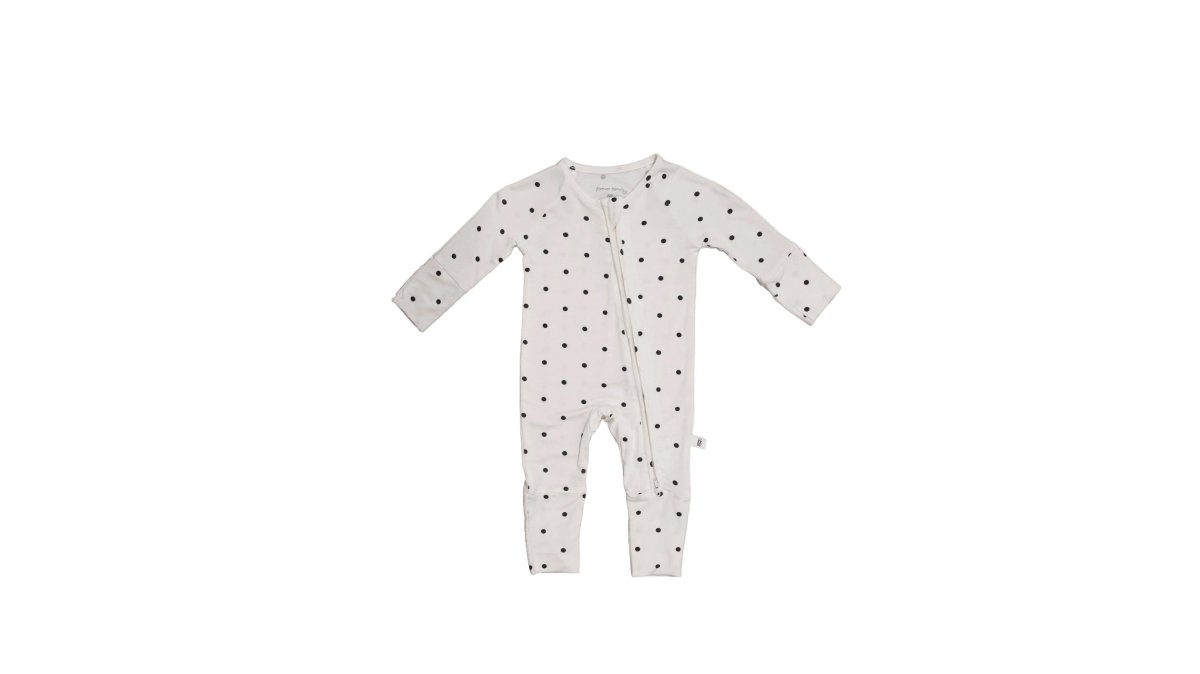
Bamboo Zip Pajamas | Annie
Made from 95% bamboo viscose and 5% spandex, this sleeper stretches with your baby and stays soft through repeated washes. Sizes run newborn through 24 months. The bamboo fabric is hypoallergenic and breathable, keeping skin cool in summer and warm in winter. Shop the Annie print.
Magnetic Me Convertible Sleepers
Magnetic Me's convertible sleepers convert from a full sleeper to footless style as your baby grows, so the same piece lasts through multiple stages. The Apple Blossom Ruffle version ($42) adds ruffle detailing, while the Nursery Magic Cream ($40) keeps things simple. Both use magnetic closures for fast changes.
Knitted Layette Sets and Picot Trim Footies
For a coming-home outfit, the Nipperland knitted layette sets ($124) are GOTS-certified organic cotton, hypoallergenic, and fit up to 3 months. Each five-piece set includes a kimono-style romper with side-tie closure for gentle diaper changes. For something simpler, the picot trim footies ($34) come in yellow, white with blue trim, and white with pink trim, with monogramming available.
Organic Baby Clothes for Sensitive Skin
Organic baby clothes for sensitive skin matter most in the first months, when a newborn's skin barrier is still developing. Look for GOTS-certified cotton or bamboo viscose, which avoid the finishes and dyes that trigger reactions in some babies.
What most guides miss is that fit matters as much as fabric. A sleeper that's too tight creates friction at the neck, wrists, and ankles, irritating skin regardless of the garment.
Newborn Clothes Sizing Guide: How Many and What Size
Most sizing guides tell you what the tag says, but the tag is a starting point, not a rule. Newborn sizing is the biggest source of wasted money in a first wardrobe, so plan around how babies actually grow rather than how the labels are printed.
What the sizes actually mean
- Preemie: Roughly up to 5 pounds. Most parents never need this size unless a baby arrives early.
- Newborn (NB): Typically fits up to about 8-9 pounds. For many babies, this is a two-to-three-week window, and some larger babies never fit it at all.
- 0-3 months: The workhorse size. Most babies live here from about 8 to 12 pounds, often for six to ten weeks.
A baby born over 8 pounds often skips newborn size entirely. If a prenatal estimate puts your baby on the larger side, buy only a handful of newborn pieces and put the rest of your budget into 0-3 months.
How many pieces per size
Plan around how often you do laundry. If you wash every two to three days, you need roughly two days of outfits plus a small buffer, since spit-up, blowouts, and leaks mean some pieces get worn for only an hour.
- Newborn size: 4-6 pieces. Enough for the first two weeks without overcommitting.
- 0-3 months: 8-10 pieces. This is where most of your budget should go.
- 3-6 months: 6-8 pieces. Buy as your baby grows rather than ahead of time.
Why not to buy ahead
Growth rates vary too much to predict, and seasonal timing rarely lines up with what you guessed. A baby born in early spring may be in 3-6 month sizes by the time summer heat arrives, leaving the fleece sleepers you stocked up on unused. Buy one size ahead at most, and let actual weight and length guide the next purchase.
A quick size-planning worksheet
Size |
Approx. Weight |
Pieces to Buy |
When to Buy |
|---|---|---|---|
Preemie |
Up to 5 lb |
0-4 |
Only if advised |
Newborn |
Up to 8-9 lb |
4-6 |
Before birth |
0-3 months |
8-12 lb |
8-10 |
Before birth |
3-6 months |
12-16 lb |
6-8 |
After 6 weeks |
Treat the weights as ranges, not cutoffs. A long, lean baby may outgrow a size by length before weight, and a shorter, rounder baby may stay in a size longer. When in doubt, size up: a slightly loose sleeper is safer and more comfortable than a tight one.
Your Newborn Outfit Checklist for the First Six Weeks
A newborn outfit checklist for the first six weeks should cover daywear, sleepwear, outings, and backup. Print this and take it to the store, or use it to build a registry.
- 6-8 bodysuits or onesies in 0-3 months
- 4-6 sleepers or footed pajamas
- 2-3 one-piece outfits for outings
Caring for Newborn Clothes: Washing, Stains, and Longevity
Newborn clothes get washed more than almost anything else in your home. A single sleeper might go through the machine three or four times a week, so how you wash matters as much as what you buy. Care also determines whether a higher-priced bamboo or organic cotton piece stays soft long enough to justify its cost.
The wash routine that protects fabric
- Cold water, gentle cycle. Heat is the enemy of stretch fibers like spandex and of the natural softness in cotton and bamboo. Cold water cleans just as well for everyday soil and puts far less stress on the fabric.
- Mild, fragrance-free detergent. Newborn skin is thin and absorbent, and dyes and perfumes in detergent can linger in the fibers. A free-and-clear formula is the safer default.
- Don't overload the machine. A crowded drum means more friction between garments, which pills and thins the fabric over time. Wash smaller loads than you would for adult clothes.
Drying without wrecking the fabric
Air-drying is gentlest and keeps elastic waistbands and cuffs from losing their snap. If you use a dryer, keep it on low heat and pull pieces out slightly damp, then lay them flat to finish. High heat is the fastest way to shrink cotton and dull bamboo.
Stain management for the stains newborns actually make
Newborn stains fall into a few predictable categories, each with its own approach:
- Milk and formula: Rinse in cool water as soon as possible, then wash normally. These stains can yellow if left to set.
- Diaper blowouts: Scrape off solids, rinse in cool water, and treat with an enzyme-based stain remover before washing. Hot water can set the protein, so start cool.
- Spit-up: Often invisible until it dries and yellows. A pre-soak in cool water with a little detergent handles most of it.
Keep a small bucket or basin near the changing area for immediate rinsing. The longer a stain sits, the harder it is to remove, and the more aggressive the treatment you'll need.
Making pieces last
Store clean, dry clothes in a cool, dry place away from direct heat and moisture. Rotate pieces rather than always reaching for the same favorites, since even wear spreads the laundering load. When a piece starts to pill or lose its shape, retire it to backup duty rather than the donation pile, and it can still serve as a spare for middle-of-the-night changes.
Conclusion
Building a newborn wardrobe that works takes restraint more than budget. Buy fewer pieces in better fabrics, focus on closures that make 3 a.m. changes easier, and size up rather than guessing.
That's exactly what we curate at Doodlebug's Children's Boutique. Our selection runs from newborn through size 7 boys and size 12 girls, with trusted children's brands, timeless styles, and playful prints, plus a personalized shopping experience whether you visit us in Lexington or order online.
Frequently Asked Questions
What clothes does a newborn need for the first few weeks?
For the first few weeks, focus on 8-10 sleepers or footies, 6-8 bodysuits, and a few coming home outfits. A 5-piece layette set like the Knitted Newborn Coming Home Outfit covers the basics for leaving the hospital. Prioritize soft, breathable fabrics and closures that make diaper changes easy, such as magnetic closures or zippers. You will do laundry often, so having a few extra pieces in rotation helps.
What fabrics are best for newborn baby clothes?
Look for 100% cotton, GOTS-certified organic cotton, bamboo viscose, or modal. These fabrics are breathable, soft, and gentle on a newborn's sensitive skin. Bamboo and modal wick moisture well, which helps keep babies comfortable in both warm and cool rooms. Avoid synthetic blends that trap heat or rough textures that can irritate delicate skin. The Bamboo Zip Pajamas from Doodlebug's are a good example of a soft, breathable option.
How many newborn outfits should I buy?
A practical starting point is 8-10 sleepers, 6-8 bodysuits, 2-3 coming home outfits, and a few pairs of pants. Newborns go through multiple outfit changes daily, so having extra pieces reduces stress. Do not buy too many in the smallest size because babies grow quickly. Focus on a mix of newborn and 0-3 months sizes, and keep tags on some items so you can exchange if needed.
What should a newborn wear home from the hospital?
A soft footie or a layette set works well for the ride home. Choose something with easy diaper access, like the Magnetic Me Nursery Magic Convertible Sleeper or a kimono-style romper. Bring a hat and a warm blanket if the weather is cool. The key is comfort and easy changes, not a complicated outfit. Many parents pack two options in case of spills.
What is the 3 6 9 rule for babies?
The 3-6-9 rule is a general guide for baby clothing sizes: 3 months, 6 months, and 9 months. It suggests buying a few pieces in each size ahead of time so you are not caught without clothes as your baby grows. It is not a strict schedule, but it helps parents plan a wardrobe without overbuying. Adjust based on your baby's growth curve and the season.